Student intern: Anna Vegh (Biology, French)
Supervisors: Damiano Benvegnù (School of Modern Languages), Harry Watkins (St Andrews Botanic Garden)
Summary: this project worked closely with the historic plant specimen archive held as a legacy collection in the St Andrews Botanic Garden. The intern digitally scanned 301 items; counted specimens in order to have an accurate number to quote for future funding applications; made two databases of all these details; and carried out a literature review to demonstrate the different kinds of value that this collection represents. Workshops were also held with local community members to explore significant themes that could be deduced from the material and ran alongside assessment of other early botanical collections held by the University.
End Report: A Catalyst for Exciting Adventures
My most treasured memories from my Uni days will always be meeting people who have impacted me positively by helping change my worldviews. There are so many of these types of people all around St Andrews, and after four years here, I now have in my possession all the skills to give back to the community which has done so much for my development. These were the thoughts at the forefront of my mind when I applied to a BIRCH internship.
BIRCH internships are aimed at giving students a taste of what working in sustainable development after Uni is like, with a chance to sample a different working environment to what we have been accustomed to so far. This also gives students an opportunity to meet people from around the community, with different experiences and lifestyles. The prospect of discovering a field related to my Biology with French degree, but in a new context appealed to me especially. And when I found the Herbarium Holobiont project which is completed jointly with the schools of Biology and Modern Languages, I knew this was the perfect opportunity for me. Never have I applied so speedily to an internship, and was thrilled to be accepted based on such a hurriedly-composed application!
During this internship, I was privileged to work with the Margaret Gatty Algal Collection, housed in the St Andrews Botanic Gardens. At first glance I was absolutely in awe of this collection! Not having worked with anything like this ever before, it took me a moment to grasp the real significance, which encompasses history, economy, foreign cultures, female pioneers as well as of course taxonomy and science and technology. But once I had overcome how overwhelmed I felt, I fell deeply in love with this collection, and my aim, even outside my internship, became to share the wonders of this collection with as many people as possible, reaching out through emails and making valuable connections that way.
After receiving comprehensive training in the handling of fragile specimens, the tasks of the internship itself included scanning 301 items, counting all 10,061 specimens to have an accurate number to quote for future funding applications, making two databases of all these details, and performing a literature review to demonstrate the different kinds of value that this collection represents. This was done through summarising findings of working with this collection, then using a case study of a specimen collected in Sri Lanka to demonstrate the societal impact of collecting expeditions. As this was an exploratory foray into the collection, aims kept evolving based on the most exciting things found each week. This summary of findings is now being prepared for publication.
In my eyes, the way in which this project had the most significant positive impacts is the way in which it forged connections between people. Firstly in the workplace, through emails exchanged with those who had previously worked with the collection such as Dr. Heleen Plaisier and Jill Galbraith, the local community, as well as wider audiences we reached by holding two public-facing workshops with academics, artists, seaweed collectors, foragers, museums specialists, curators as well as industry experts. These started incredibly meaningful conversations, often continued via email exchanges, as there was simply too much to say to fit into two 90-minute workshops. These raised significant questions beyond the realms of science, such as the role of women in the history of science and how their work could be reattributed to their names, and the advantages of sharing hidden talents with all who could benefit from them.
To complement these exchanges, I was invited to visit the St Andrews Special Collections to view Margaret Gatty’s book on British seaweeds, the James Hutton Institute to find out more about archiving practices, to visit academics to discuss making this into a Masters project, and to the MASTS Annual Meeting held in November 2024 to discuss my work. In addition, I was asked to return to the Garden and hold a longer lecture for a larger audience as part of the Botanic Garden’s Friends Lecture Series. This greatly increased my enjoyment of the internship, and learning how to be open to advice and conversations allowed me to immerse myself fully into what a career in science could entail.
Overall, this internship moulded me into a much more well-rounded scientist, showing me that so much more goes into a successful research career than what it takes to get good grades in Uni or even school. I have learned to become much more receptive to suggestions made by colleagues, but also to take control of what I would like to achieve on a personal level as part of a group endeavour. I also increased my time management skills, as due to the Rector’s Fund I was able to participate in a STEP project alongside my BIRCH internship.
This STEP project focused on teamwork and leadership skills, in which previously I lacked confidence. This greatly enhanced my performance during the BIRCH workshops, as I knew which leadership style to employ at each separate stage of the presentation and discussions, and resulted in these events being the first where I did not display any sign of my habitual stage fright. For this I credit my incredible colleagues, fellow interns and STEP teammates.
To conclude, I would advise any student thinking about applying either for the Rector’s Fund, the BIRCH Scheme or any STEP project to “just go for it”! You never know what awaits you, what positive changes you can make, how you can blossom as a person through a project you participate in or the people you meet!


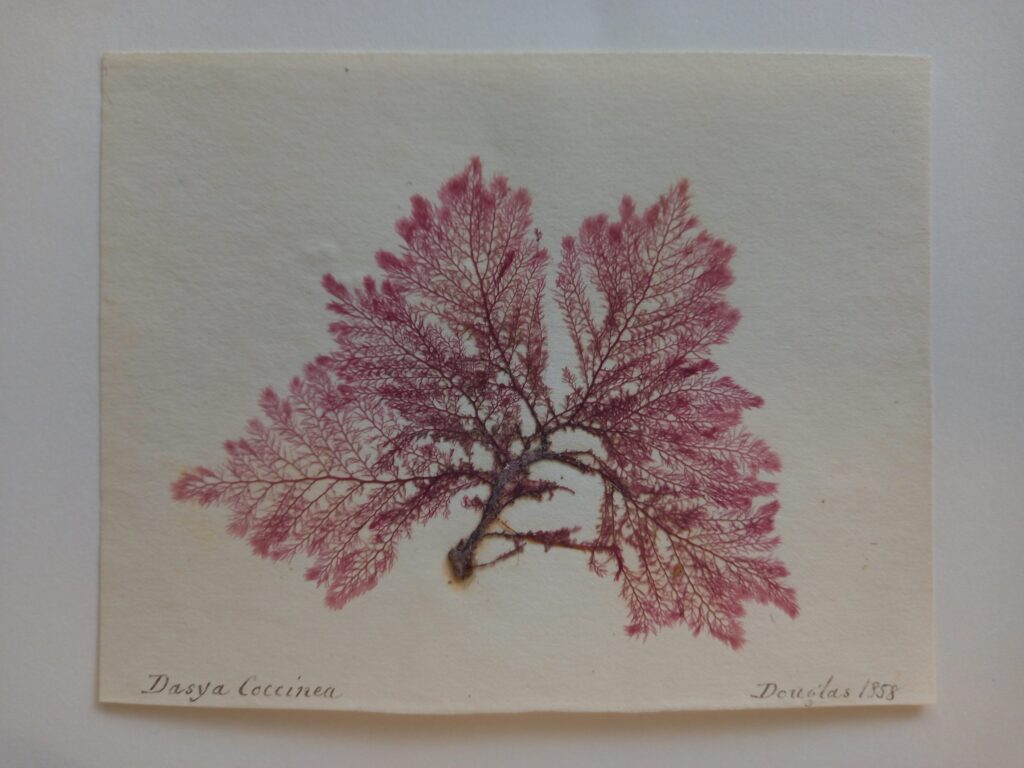
Photographs by: Anna Vegh, ‘some of my favourite specimens” from the herbarium.