Student intern: Kirstin Spence (Geography)
Supervisors: Lydia Cole (School of Geography and Sustainable Development), Althea Davies (School of Geography and Sustainable Development), Jane Pettegree (Laidlaw Music Centre), Katy Roucoux (School of Geography and Sustainable Development)
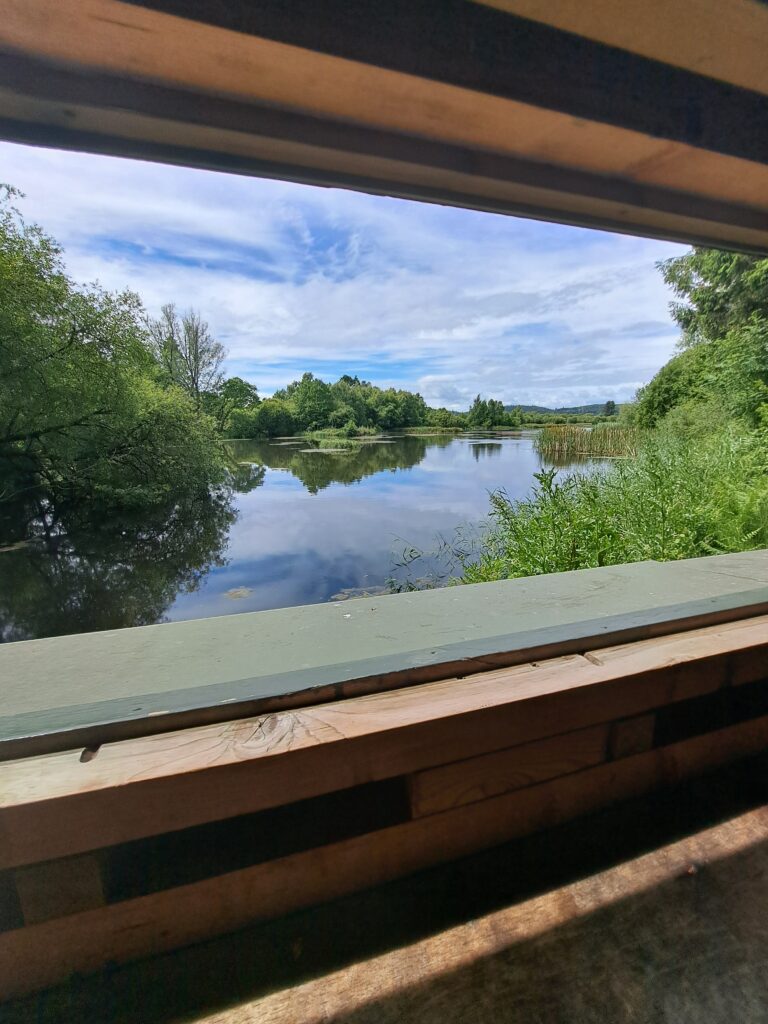
How do you engage with biodiversity? For many people, wildlife watching or bird watching might spring to mind, indicating how readily we prioritise visual cues. Sound is an overlooked way of engaging with biodiversity. While listening is often quite a passive act, active listening is a skill that involves focusing on different sounds in order to process them and tune into nature’s soundscape. Being still and alert to the sensations that arise from listening can help both humans and other creatures in shared spaces, whether that is a city or a bird hide on a dedicated nature reserve.
This project drew on ideas of R Murray Schafer, a Canadian ecologist and composer, to design a series of listening exercises to prime your ears to become a more active listener. It was developed at Morton Lochs National Nature Reserve, a wetland on the Fife coast which is managed by NatureScot, but the exercises can be done almost anywhere. The exercises guide you through site selection, general and spatial listening, and creative ways of analysing sound, and it prompts thinking around the loss and preservation of sound as a means to notice changes in biodiversity. The thirteen exercises can be completed individually or as a package, they can be done solo or alongside discussion with other active listeners.
At a time of reduced interaction with nature, due to less time spent outdoors, especially by children, and declining population sizes for many species, it is ever more important to use all our senses to remind us of the more-than human lives that we share our spaces with. These listening prompts can help retune your senses to the nature around us everyday.
Slide pack for fieldwork listening training:
An Ecological Sound EducationAn Ecological Sound Education: listening for biodiversity